A Practical Kitchen Gear Buying Guide for Home Cooks at Every Level
From knives and pans to small appliances, a well-chosen set of kitchen tools makes cooking easier and lasts for years. Here is how to prioritise purchases and judge quality without overspending.

A kitchen does not need to be filled with gadgets to be functional. Some of the most capable home cooks work with a surprisingly small collection of tools, chosen carefully and looked after well. Others accumulate drawers full of single-purpose devices that rarely leave the cupboard.
Whether you are setting up a first kitchen, replacing worn equipment or simply wondering what is worth buying, the principles are the same. Focus on the tools you will use most, buy the best quality you can reasonably afford for those, and be sceptical of anything that promises to do only one thing.
Start With the Essentials
A small group of tools does most of the work in a typical home kitchen. Getting these right will improve everyday cooking far more than any specialist appliance.
- A sharp chef's knife that feels comfortable and balanced in your hand.
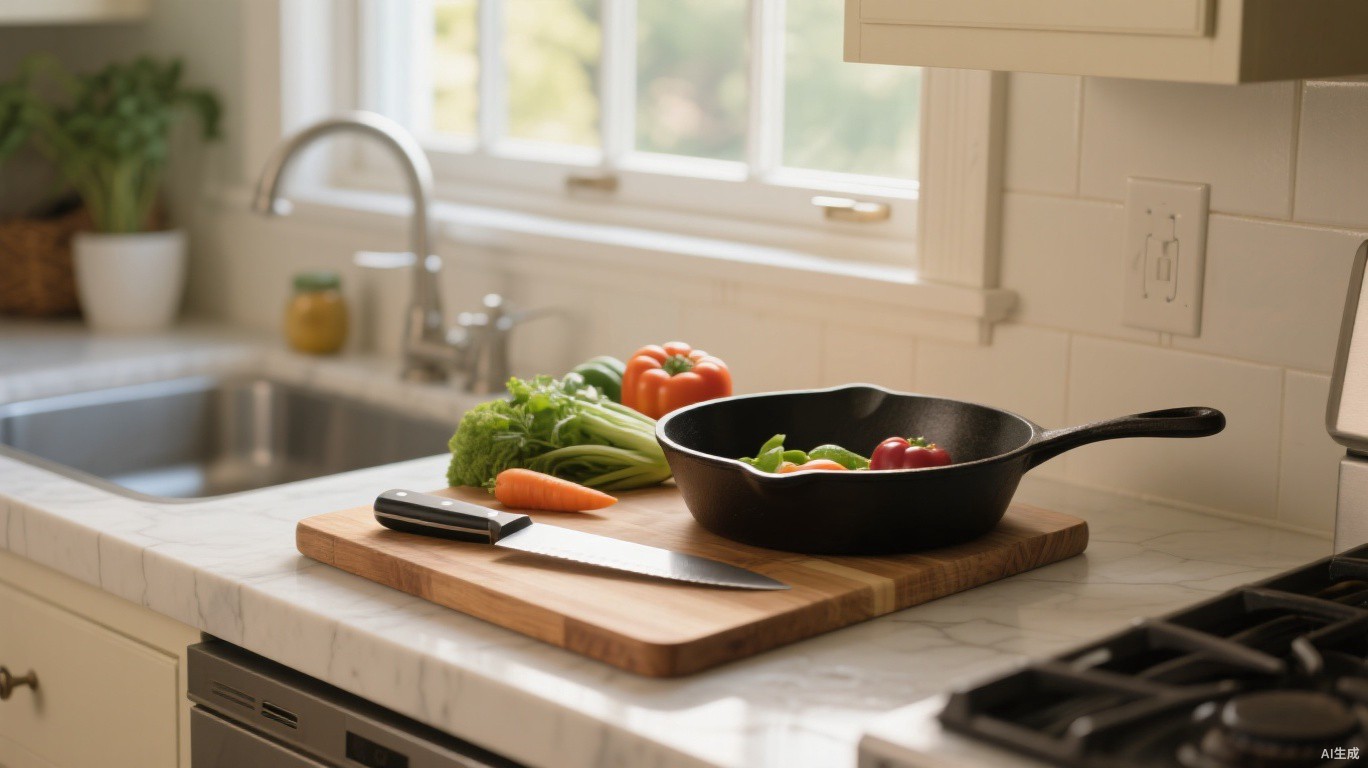
- A large, stable cutting board made of wood or quality plastic.
- A heavy-based frying pan or skillet for searing and sautéing.
- A medium saucepan with a well-fitting lid.
- A large pot for pasta, stock, soups and batch cooking.
- A sturdy baking tray that resists warping at high temperatures.
A professional cook who now teaches evening classes in Dublin tells her students that these six items cover the vast majority of recipes they will encounter. Everything else, she says, is a refinement rather than a necessity.
How to Judge Knives and Cookware
With knives, comfort matters as much as the steel. Hold a knife before buying if you can, and pay attention to weight, balance and how the handle fits your grip. A knife that feels awkward will be used reluctantly, no matter how good its blade.
Buy fewer kitchen tools, choose them with care, and look after them well; they will repay you for years.
Consider maintenance too. Some steels hold an edge longer but are harder to sharpen at home, while others are more forgiving. A simple honing steel and occasional sharpening, whether at home or by a professional service, will keep almost any decent knife working well.
For cookware, a heavy base spreads heat evenly and reduces hot spots. Stainless steel is durable and versatile, cast iron excels at holding heat and develops a natural non-stick surface over time, and coated non-stick pans are convenient for eggs and delicate fish but tend to have a shorter lifespan. Check whether pans are compatible with your hob, especially if you use induction, and whether handles are oven-safe.
Choosing Small Appliances Wisely
Small appliances can be genuinely useful, but they also take up counter space and storage. Before buying, ask how often you would realistically use the item and whether a tool you already own could do the same job.
A good blender or food processor can earn its place if you regularly make soups, sauces or doughs. A kettle and a toaster are everyday staples in many homes. More specialised machines are worth considering only if they match a clear and regular habit.
When comparing appliances, look at build quality, ease of cleaning, noise levels, availability of replacement parts and warranty length. Removable parts that are dishwasher-safe can make the difference between an appliance that gets used and one that gathers dust.
Spend Where It Counts
Not every kitchen purchase deserves the same budget. A home economist in Brisbane recommends a simple rule: spend more on the items you touch every day and on anything that involves heat, and save on items that are easy to replace.
In practice, that might mean investing in a good knife and a solid pan while buying measuring cups, spatulas and mixing bowls from more affordable ranges. Sets can look like good value, but they often include pieces you will never use. Buying individual items lets you build a collection that fits your cooking.
Look for durable materials, clear care instructions and sensible warranties. Reviews that describe how a product performs after months of use are more useful than first impressions.
Care, Storage and Longevity
How you look after kitchen tools shapes how long they last. Wash good knives by hand and dry them promptly, store them in a block, on a magnetic strip or with blade guards, and avoid cutting on glass or stone surfaces that dull the edge quickly.
Season cast iron after washing, avoid metal utensils on non-stick coatings, and let hot pans cool before plunging them into cold water to reduce the risk of warping. Wooden boards benefit from occasional oiling and should never soak in water.
A thoughtfully chosen kitchen is not about owning everything. It is about having the right tools, in good condition, ready when you need them. Start with the essentials, add pieces as your cooking grows, and the collection you build will serve you for many years.